
Dollar Donation Club

// INTEGRATED IMPACT SCORE //

Organization

Sharing Excess

🛡️ Trust Rating

🧐 Risk Rating

Return On Donation

$1

16Meals Provided
Flying Pig Logo
100 %

Integrated Impact ScoreVetted By

32 Meals Provided32 in December
Flying Pig Logo

Expert Consensus

A collaborative, efficient food-rescue model that brings skill and creativity to fragmented charitable food systems to effectively tackle hunger hidden in plain sight.

Snapshot

The Solution

Sharing Excess mitigates hunger and food waste by efficiently redistributing surplus food from retailers, wholesalers, and farmers to hunger relief organizations across the U.S. and Canada.

Impact to Date

171,271,577 pounds of food distributed so far (live tracker here)

Location of Impact

Primarily Philadelphia and NYC, but rescuing and distributing food across 33 states and Canada

Impact Per $1

  • 16 meals provided

  • 20 pounds of produce rescued

  • Prevention of 90 pounds of CO2 emissions.

Proof of Impact

Food Rescue App, they track every pound of food from donor to recipient

Time to Realize Impact

Funds are deployed 2-3 weeks after being recieved.

Fund Usage
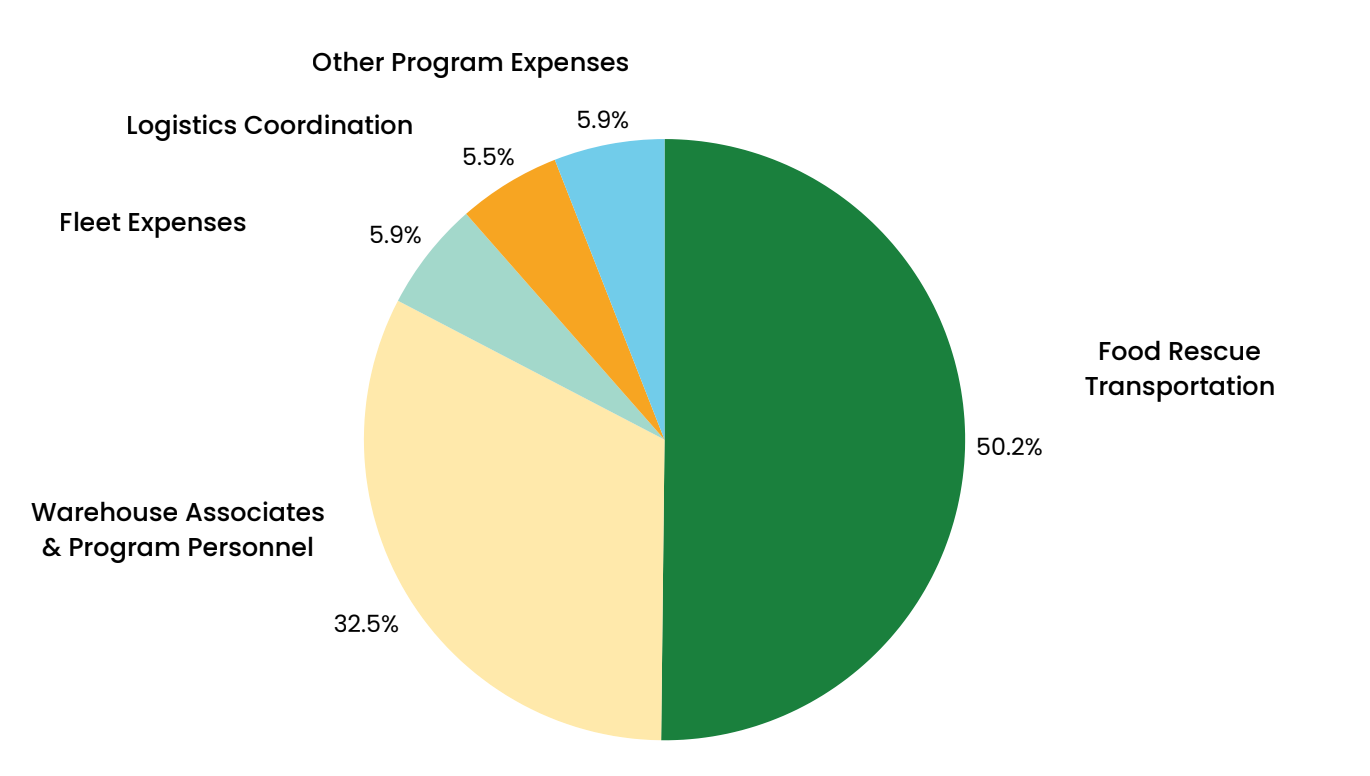

All of the food they rescue is donated to them at no cost, which means their greatest investment is in the people and logistics that make food rescue possible. From drivers and warehouse associates to trucks and vans, staff and logistics are the backbone of moving millions of pounds of food to communities in need.

Will it actually make a difference?

Yes! Every dollar donated rescues 20 pounds of food, providing 16 nutritious meals to underserved families and reducing landfill waste (and the methane and CO2 emissions they produce). Donations not only fight hunger but also help the environment by reducing waste, building stronger communities with better access to fresh food. 

How is the donation used?

Donations rescue surplus food from farms, wholesalers and retailers and deliver it to communities in need. Your donation supports transporting food (diverting from landfills) and partnering with local organizations to turn raw ingredients into meals for the hungry. It turns food that would end up in landfills into meals for people, fighting hunger and cutting greenhouse gas emissions.

DDC's Favorites

  • Sharing Excess keeps it simple: they bridge the gap between hunger and food waste with a clear, logistics-based solution.

  • Their model turns surplus into impact—rescuing food that would go to landfills and redirecting it into meals for communities in need.

  • They work with 660+ partners, creating a network of collaborators.

Key Drawbacks

  • Their model relies on ongoing donations and partnerships. While they are developing self-sustaining revenue streams, these are not yet sufficient to cover operations or expansion.

  • Food rescue addresses a critical gap, but it alone cannot solve root causes of food insecurity such as poverty, unemployment, and systemic inequities. Broader policy and social change will be needed alongside their efforts.

Integrated Impact Score

Total Score100%

Effectiveness

85%

Per dollar, how effective is this organization at creating measurable impact?

5
1
2
3
4
5
Extremely ineffective
Ineffective
Average effectiveness
Effective
Extremely effective

$1 = 20 pounds of produce rescued, 16 meals provided to food-insecure individuals and a reduction of 90 pounds of CO2 emissions.* This impact comes from avoiding methane pollution and the wasted resources that would occur if those 20 lbs of food were left to rot.

Each pound of food rescued has an estimated retail value of $1.92. Therefore, for every $1 spent, an economic impact of approximately $38.40 in food value is generated.

See the types of foods rescued here

These metrics show remarkable efficiency in creating multiple layers of impact (food waste reduction, hunger relief, and environmental benefits) per dollar donated.

* EPA’s WARM tool estimates that rescuing 1 short ton of mixed food waste (preventing it from landfills and avoiding the need to produce new food) can avoid up to ~4.08 metric tons of CO₂-equivalent emissions. That high-end scenario (including upstream production savings) translates to about 4.5 lbs of CO₂ avoided per pound of food donated. So per dollar donation 90 (20*4.5) lbs of CO₂ avoided.

Is the organization's team credible and effective?

4
1
2
3
4
5
Extremely ineffective
Ineffective
Average effectiveness
Effective
Extremely effective

The organization has been led by a capable team since its founding in 2018. They have expanded their team to 59 members, and established partnerships with more than 660 organizations. Their work includes managing complex logistics systems across diverse contexts.

While the team has achieved notable progress, they are still relatively early in their development. As a younger organization, they have limited long-term track record, but their work to date reflects solid execution and a clear commitment to continued growth.

Does the organization have a clearly defined mission, vision and values?

5
1
2
3
4
5
Undefined
Unclearly defined
Relatively clearly defined
Clearly defined
Extremely clearly defined

Mission: To solve the logistical barriers between excess and scarcity to efficiently rescue and distribute surplus from retailers, wholesalers, and farmers to a network of hunger relief organizations to alleviate food insecurity.


Vision: A more sustainable and equitable food system.


Values: Sustainability, equity, community empowerment, and innovation


Read more here

How simple/elegant is the solution?

5
1
2
3
4
5
Extremely complex
Complex
Simple
Very simple
Extremely simple

Their solution efficiently connects surplus food to those in need through a clear, logistics-based platform that tracks donations from source to destination. With a successful volunteer model and easy-to-use technology, they make food rescue both scalable and effective.

How scalable is the solution-set beyond its use-case geography?

5
1
2
3
4
5
Extremely unscalable
Very unscalable
Relatively scalable
Very scalable
Extremely scalable

Sharing Excess’s model is highly scalable, using a flexible technology platform that works across different regions and food supply chains. With a long-term goal of operating in every major food terminal worldwide, they aim to ensure all edible surplus is properly donated and never wasted. Their adaptable partnerships and proven success in both urban and suburban areas demonstrate strong potential for national and global expansion.

How well does the solution create self-generating capabilities rather than rely on ongoing investment?

3
1
2
3
4
5
Extremely reliant on ongoing investment
Very reliant on ongoing investment
Somewhat self-generating
Very self-generating
Extremely self-generating

Sharing Excess has begun to develop self-sustaining capabilities through service fees from partners and food banks, potential technology licensing, and operational efficiencies. However, these efforts are not yet sufficient to cover all operational and expansion costs, leaving the organization reliant on significant ongoing donations to achieve its mission and scale effectively.

How efficient is the process of achieving a self-sustaining solution?

2
1
2
3
4
5
Extremely dependent
Very dependent
Fairly independent
Very independent
Extremely independent

Sharing Excess is taking concrete steps toward self-sustainability through earned income streams such as service fees for food sourcing, transportation logistics, and organic waste management. In FY2023, these program services generated about $801k in revenue, alongside $3M in cash contributions and grants.

When excluding donated food (valued at $65.8M), Sharing Excess’s true cash operating costs were about $3M. Earned revenue covered roughly 26.7% of those costs, with the balance still dependent on grants and donations

While this shows meaningful progress toward diversification, the majority of operations remain reliant on philanthropy. Expanding fee-based partnerships and service income will be essential for long-term sustainability.

How much risk is there that the impact will be reversed for any reason?

5
1
2
3
4
5
Extremely risky
Very risky
Relatively risky
Very low risk
Extremely low risk

Sharing Excess faces minimal risk of impact reversal due to ongoing food waste and hunger, strong community ties, and reliable partnerships. Their tech stack and diverse funding make their model stable and sustainable long term.

The main risks to their model include changes in food industry practices, shifts in donation patterns, and economic disruptions. Sharing Excess reduces these risks through strong partnerships and flexible strategies.

Transparency

100%

How transparent is the organization financially?

5
1
2
3
4
5
Extremely non-transparent
Very non-transparent
Somewhat transparent
Very transparent
Extremely transparent

Sharing Excess provides a link to their financials page on their website. Also, they shared their 2024 audit here.

How transparent is the organization operationally?

5
1
2
3
4
5
Extremely non-transparent
Very non-transparent
Somewhat transparent
Very transparent
Extremely transparent

To promote operational transparency, Sharing Excess lists upcoming events and shares news updates on their website, making information about their activities publicly accessible. Additionally, their app provides more detailed, real-time information about surplus food pickups and donations.

Are regular updates on progress made readily available to donors?

5
1
2
3
4
5
Not at all
Very infrequently
Occasionally
Very frequently
Extremely frequently

Sharing Excess will provide monthly updates. These cover progress, challenges, and key developments, with real-time impact once funding begins. All updates are available through their custom web app for easy access and sharing.

Track record

90%

How many years has the organization been in operation?

4
1
2
3
4
5
0-1
1-3
3-5
5-10
10+

Sharing Excess has been in operation since 2018, making it 7 years old as of 2025.

  • Retail Rescue Program has been operational since 2018 and continues to evolve, making it 6 years in duration. 

  • Wholesale Rescue Program şaunched in July 2021, this project has been active for approximately 2.5 years. 

  • Direct Link Program began in 2022 and is currently ongoing, making it 2 years in duration. 

How much positive impact has the organization created in the past in it's category?

5
1
2
3
4
5
No past impact
Very little impact
Some positive impact
Significant impact
Extremely impactful

Sharing Excess has successfully rescued and redistributed over 171 million pounds of fresh food to date. This monumental effort has provided the equivalent of over 65 million meals to individuals and families facing food insecurity across Philadelphia and beyond. 

Additionally, by diverting food from landfills, Sharing Excess has prevented the release of approximately 292 million pounds of greenhouse gas emissions — that’s roughly the same annual emissions produced by 68 million gasoline-powered passenger cars.

How long has the solution-set been demonstrated to be effective?

4
1
2
3
4
5
< 1 year
1-3 years
3-7 years
7-10 years
> 10 years

The solution of diverting surplus food to feed people is not new — food banks and rescue programs have operated for decades. What distinguishes Sharing Excess is how they’ve scaled this approach since their founding in 2018, using technology and logistics to move food more efficiently and transparently. So while the solution-set has been demonstrated effective for well over 7 years in the broader sector, Sharing Excess’s own model has proven effective in practice for about 7 years to date.

How clearly does the organization embody the values it purports to have?

5
1
2
3
4
5
Extremely unclear
Very unclear
Somewhat clear
Very clearly
Extremely clearly

Sharing Excess exemplifies its core values—sustainability, equity, and community empowerment—through practical actions like rescuing surplus food and prioritizing distribution to underserved areas. Its sustainability efforts include composting inedible food and minimizing landfill waste, making environmental stewardship a daily operational priority. The organization advances equity by serving marginalized communities without requiring proof of need, reducing stigma and increasing access to nutritious food. Through strong community partnerships, volunteer engagement, and transparent tracking via a custom app, Sharing Excess fosters empowerment and accountability across all its initiatives.

Measurability

96%

Does the organization have a clearly defined "big goal" that is measurable?

5
1
2
3
4
5
Undefined
Unclearly defined
Relatively clearly defined
Clearly defined
Extremely clearly defined

Sharing Excess has a clear and measurable "Big Goal" of distributing 1 billion pounds of food by 2030.

Does the organization have a clear understanding of the total projected cost to achieve the "big goal"?

4
1
2
3
4
5
Undefined
Unclearly defined
Relatively clearly defined
Clearly defined
Extremely clearly defined

Sharing Excess mentioned having an internal roadmap with cost projections, but without access to those figures, it's challenging to fully evaluate their financial planning. That said, they demonstrate a strong understanding of the impact of their donations on a per-dollar basis.

Without accounting for scaling costs, if $1 rescues 20 lbs and the “big goal” is 1 billion pounds, it will cost an estimated $50,000,000 to achieve this objective.

Does the organization have a clear understanding of what $1 can accomplish?

5
1
2
3
4
5
Undefined
Unclearly defined
Relatively clearly defined
Clearly defined
Extremely clearly defined

Yes,  for every $1 invested, Sharing Excess is able to rescue approximately 20 pounds of food. This translates to about 16 meals provided to individuals in need. Each pound of food rescued has an estimated retail value of $1.92. Therefore, for every $1 spent, we generate an economic impact of approximately $38.40 in food value.


Lastly, each pound of food rescued prevents approximately 4.5 pounds of greenhouse gas emissions from entering the atmosphere. This means that for every dollar spent, we contribute to the prevention of 90 pounds of CO2 emissions.

Is the positive outcome quantifiable?

5
1
2
3
4
5
Extremely unquantifiable
Very unquantifiable
Somewhat quantifiable
Very quantifiable
Extremely quantifiable

Sharing Excess provides quantifiable metrics of their work, including total food rescued, meals provided, economic value generated, and greenhouse gas emissions reduced.

How well does the organization monitor and verify their ongoing progress?

5
1
2
3
4
5
Extremely unquantifiable
Very unquantifiable
Somewhat quantifiable
Very quantifiable
Extremely quantifiable

Sharing Excess has a robust monitoring and verification system in place, utilizing a combination of technology, data analysis, and community feedback. Their custom mobile app allows for real-time tracking of donations and distributions, ensuring accurate data collection (example screenshot).

Wisdom

85%

Does the solution address a root cause, or a symptom?

4
1
2
3
4
5
Extremely symptom focused
Very symptom focused
Relatively root focused
Very root focused
Extremely root focused

Sharing Excess’s solution targets a systemic factor in food insecurity – the breakdown between surplus food and people in need. By improving logistics and infrastructure, it ensures more nutritious excess food reaches families who lack it. This approach attacks a key cause of avoidable hunger (food not getting to the hungry) and is a crucial part of the solution. However, it complements – rather than replaces – efforts to address other root causes of food insecurity like poverty, unemployment, and lack of affordable living costs

Does the solution have an economic model that is self-sustaining?

4
1
2
3
4
5
Absolutely no self-sustaining model
Very little self-sustaining model
A relatively self-sustaining model
A very self-sustaining model
An extremely self-sustaining model

Sharing Excess presented a multi-faceted revenue model combining earned income from service fees, philanthropic support, and partnerships with food businesses.  While currently reliant on a mix of revenue streams, their commitment to increasing earned revenue through service fees demonstrates a path towards greater self-sufficiency.

To what degree does the solution prevent other potentially beneficial solutions from emerging?

5
1
2
3
4
5
To an extremely high degree
To a very high degree
To some degree
To a relatively low degree
To an extremely low degree

Sharing Excess acknowledged the challenge of predicting the emergence of new solutions. However, they emphasized their openness to collaboration and adaptation, focusing on maximizing impact within their niche of food rescue. Their willingness to adapt to new solutions strengthens their long-term viability.

Does the solution integrate into local populations as part of the solution?

5
1
2
3
4
5
Not at all
Very little
Somewhat
Very much
Highly integrated

Sharing Excess demonstrated a deep integration with local communities. Their partnerships with over 660 organizations, volunteer engagement opportunities, and focus on empowering local leaders showcase a collaborative approach to addressing food insecurity.  Their work goes beyond food distribution, aiming to build community ownership and resilience.

Does this solution produce any negative impact on indigenous populations?

5
1
2
3
4
5
Extremely
Very much
Somewhat
Very little
Not at all

Based on our review, there is no negative impact on indigenous populations.

They also partnered with the Hopi Reservation between March and November 2023 and provided 121,826 lbs of donated food.

Does the solution consider its impact at least 7-generations into the future (>100 years)?

3
1
2
3
4
5
Not at all
Very little
Somewhat
Very much
Highly integrated

Sharing Excess is creating a long-term impact by addressing the root causes of food waste and insecurity, fostering sustainable food systems that can benefit future generations. Additionally, their commitment to reducing greenhouse gas emissions through food rescue and composting ensures environmental sustainability, securing a healthier, more equitable future for the generations to come. 


While the organization effectively targets systemic inefficiencies, it does not directly address poverty alleviation, limiting its ability to guarantee food security for beneficiaries seven generations into the future. However, they shared with us some of their advocacy plans for policy change around nutrition access.

What is the risk of unintended negative consequences?

4
1
2
3
4
5
Extremely likely
Very likely
Somewhat likely
Very unlikely
Extremely unlikely

Sharing Excess acknowledges the potential unintended consequences of food rescue—such as dependency, market disruption, and recipient stigmatization—and proactively addresses them through community empowerment and strategic partnerships. By integrating donations into broader programs like nutrition education and supporting local vendors through collaborative, non-competitive food distribution, the organization fosters long-term resilience rather than dependency. Additionally, its inclusive, rights-based approach to food access reduces stigma and ensures that rescued food serves as a tool for empowerment, not marginalization.

They also have a food recall response protocol to ensure the quality of the products being distributed.

How significant are the known negative consequences (or trade-offs) of this solution?

4
1
2
3
4
5
Extremely significant
Very significant
Somewhat significant
Not very significant
Not at all significant

The main negative consequences of Sharing Excess’s approach include potential community dependency on gifted food, market disruption, and stigma around receiving aid. These risks are actively mitigated through education, strategic partnerships, and a destigmatizing, community-centered model. While not all impacts are formally quantified per partner, the organization monitors these concerns through collaboration and adjusts practices to align with each project’s context.

Impact Innovation

100%

How audacious is the "big goal"?

5
1
2
3
4
5
Not at all
Very little
Somewhat
Very much
Extremely

Distributing one billion pounds of food by 2030 is an extremely audacious goal, especially considering their current scale. The goal is both ambitious and transformative in addressing food waste and hunger at a national scale.

How difficult is this challenge to solve (weighing this against how many other organizations have found effective solutions)?

5
1
2
3
4
5
Not difficult at all
Not very difficult
Difficult
Very difficult
Extremely difficult

Food waste and food insecurity represent complex, systemic challenges that involve multiple stakeholders, logistical hurdles, and deeply rooted societal issues. The challenge requires coordinating numerous parties (food businesses, distributors, nonprofits, volunteers), managing perishable goods, and creating efficient distribution networks. Despite many organizations working on this issue, no one has fully solved these interconnected problems, highlighting the extreme difficulty of the challenge.

How much has the organization demonstrated an ability to innovate around novel problems?

5
1
2
3
4
5
Extremely non-innovative
Very non-innovative
Somewhat innovative
Very innovative
Extremely innovative

Sharing Excess has demonstrated remarkable innovation by developing proprietary technology for real-time food rescue, creating efficient logistics for large-scale operations, and building a hybrid model that blends volunteer support with professional management. Its strategic partnerships enable effective last-mile distribution, and the organization proved its agility by rapidly scaling during the COVID-19 pandemic.

How urgent is this challenge to solve?

5
1
2
3
4
5
Extremely distant
Relatively distant
Relatively urgent
Very urgent
Immediate threat

In 2023, 14.3% of U.S. households—about 47.4 million people—experienced food insecurity, including 7.2 million children, marking the highest rate in nearly a decade. Meanwhile, food waste—constituting roughly 24% of landfill volume—produces 58% of fugitive methane emissions from landfills, a greenhouse gas up to 25× more potent than CO₂. Globally, food loss and waste drive 11% of greenhouse gas emissions, amplifying climate change. This overlap of urgent hunger and environmental harm demands swift intervention—from reducing waste to strengthening food assistance—to avert deepening social and climatic crises.

Impact Stack

7.7

SDG01

By providing access to free, nutritious food, Sharing Excess helps reduce the financial burden on low-income families who would otherwise spend significant portions of their income on food. This enables families to allocate resources to other essential needs.

SDG02

The organization has made a direct and significant impact by rescuing over 100 million pounds of food, providing more than 83 million meals, and partnering with over 660 organizations serving food-insecure communities. Their efforts address both immediate hunger needs and systemic food distribution challenges.

SDG03


It improves community health outcomes by providing access to nutritious food and distributing fresh produce and healthy options. Additionally, it supports better dietary choices for food-insecure populations.

SDG04

No direct impact

SDG05

No direct impact

SDG06

No direct impact

SDG07

No direct impact

SDG08

No direct impact

SDG09

It directly addresses food waste by rescuing surplus food from businesses, creating efficient distribution channels, and promoting responsible food management. This approach helps reduce waste throughout the food supply chain.

SDG10

This initiative addresses systemic inequalities by ensuring food access in underserved communities and creating equitable distribution systems. It bridges food surplus and scarcity gaps while empowering local organizations to address these disparities.

SDG11

By strengthening local food rescue networks and community-based distribution systems, the initiative enhances urban food security and reduces food waste. This approach fosters sustainable cities by improving food access in urban environments.

SDG12

The project directly tackles food waste by rescuing surplus from businesses, creating efficient distribution channels, and promoting responsible food management. It reduces waste across the food supply chain, contributing to more sustainable consumption practices.

SDG13

The initiative prevents over 55 million pounds of CO2 emissions, reduces methane from landfill food waste, and lowers transportation emissions through efficient logistics. It also promotes sustainable food systems as part of broader climate action efforts.

SDG14

No direct impact

SDG15

No direct impact

SDG16

No direct impact

SDG17

The initiative thrives on a strong partnership model, collaborating with over 660 organizations, food businesses, and local communities. This cross-sector engagement helps drive collective impact toward sustainable food systems and broader development goals.

Expert Vetters

Dana Gunders's photo

Dana Gunders

Food Recovery Network. Advisor ¡ FoodCrunch. Advisor ¡ ReFED. Board Secretary and Founding Board Member

"Sharing Access stands out as a really collaborative and creative organization that is taking on the food rescue with a lot of passion."

Brian Roe's photo

Brian Roe

Professor in the Department of Agricultural, Environmental and Development Economics at Ohio State University

"Sharing Access seems highly capable of bringing efficiency and skill to previously fragmented charitable food systems."

Malarie McGalliard's photo

Malarie McGalliard

More Than Food Consulting

"Sharing Excess is a smart model for addressing hunger hiding in plain sight."

Individual Questions

The Context

Food insecurity and food waste are deeply intertwined challenges. On one hand, hundreds of millions of people worldwide lack reliable access to adequate, nutritious food; on the other hand, vast amounts of food are lost or discarded across the food system. Understanding both dynamics is essential for designing interventions that reduce waste and improve food access, resilience, and equity.

Food Insecurity in the U.S.

Food insecurity in the United States refers to households that, at times during the year, are uncertain of having—or unable to acquire—enough food for all members because of insufficient financial or other resources.

Some key facts and trends:

These figures reflect chronic structural vulnerabilities: wage stagnation, rising costs of basic goods, uneven access to transportation and grocery retail, healthcare burdens, and uneven social safety nets. Additionally, food insecurity intersects with other health and social challenges: individuals in food-insecure households are more likely to have diet-related chronic diseases, mental health burdens, and disruptions in child development and educational outcomes (especially when nutritional quality—not merely calorie sufficiency—is compromised).

Food Loss and Waste in the U.S.

In the U.S., food loss and waste happen at all stages of the food system—from farm to fork—and represent both a moral inefficiency and a major environmental burden.

Scale and scope

Environmental and systemic impacts

  • Food waste is a major contributor to greenhouse gas emissions in the U.S.:

  • Wasted food also represents wasted resources: land, water, fertilizer, labor, energy for processing and transport, and capital invested in production infrastructure.

  • When food that could have fed people instead goes to waste, the opportunity cost is both ethical and economic: it exacerbates pressure on supply systems, increases cost of goods, and diverts logistical capacity to disposal rather than distribution.

    Surplus redistribution / food rescue: Getting excess or unsold food into the hands of those in need is a promising channel. But this is logistically complex: perishability, timing mismatches, safety and liability concerns, transportation costs, and regulations (e.g. liability protections) often thwart large-scale redistribution.

About

We’re levelin’ up philanthropy!


The Dollar Donation Club Integrated Impact Score was designed to ensure that the world’s most powerful and holistic solutions are presented to our members. The goal is to identify acupuncture points of change – solutions that create maximum positive benefit using minimal resources, while triggering a large cascade of additional benefits.


More importantly, the Integrated Impact Score embodies our approach of smart-philanthropy.


It’s not enough for us to give with only our heart. We must also give intelligently – identifying solutions that address root causes, generate outsized measurable outcomes, integrate holistically into existing communities, consider long-term impacts, reduce the risk of unintended consequences and lead to self-reliant capabilities rather than co-dependencies.


It’s time for us to focus less on things like “overhead ratios” and more on the total, holistic positive result per dollar. Oh yeah, and it should be fun!


We believe that the best solutions...


  • Solve root-causes rather than symptoms.
  • Consider their impact 100 years into the future.
  • Produce massive impact efficiently.
  • Care for people and planet holistically.
  • Leverage nature’s and humanity’s best technologies.
  • Are radically transparent – financially and operationally.
  • Are resilient against threats of reversal.
  • Result in self-reliance, rather than dependence.
  • Clearly understand total costs to achieve outcomes.

This vetting methodology was designed with careful care to identify these solutions.


How we calculate the Integrated Impact Score:


Individual Dimension Score


The scores for each individual dimension (e.g. Transparency, Measurability) are calculated by adding up the total points (1-5) per section and dividing by the total possible points for that section.


Impact Stack


The amount of points awarded for the Impact Stack section is based on an assessment of how directly or indirectly and effectively or ineffectively the solution addresses a particular Sustainable Development Goal, using the SDG indicators as a guide. Impact Stack is treated like a bonus of points by adding up the total Impact Stack score and dividing by 10 (i.e. every 10 points gives a bonus of +1 to the final IIS score).


Overall Integrated Impact Score


The overall Integrated Impact Score is calculated by averaging the total scores received in each of the Individual Dimensions (e.g. Transparency, Measurability, etc.). We then add the bonus points awarded by the Impact Stack. Overall scores are rounded up to the nearest integer at 0.5 (e.g. if a score of 94.5 is calculated, the final score will be 95, if a score of 94.4 is calculated, the final score will be 94).


footer bgnoise pattern

100% of contributions go to the Dollar Donation Club Fund, a wholly owned subsidiary of Legacy Global Foundation Inc, a public 501(c)3 charitable organization.

Š Dollar Donation Club 2025